Mizzly Dick

Feeling fully pumped up following last week’s statement of intent to keep my greying temples above the rising water level of middle age, I rocked up to my local Park Run on Saturday and ran an almost personal-best-equalling time, coming in one second slower. That personal best I should add was set three-and-a-half years ago. It was the sort of performance that would demand a urine test. For now middle age can do one.

Following this effort, came the satisfying glow of achievement. You know, the sort of one you get when you manage not to pee on the bathroom floor. No? Just me then. Usually on Saturday mornings after the Park Run, the time up until midday is spent loafing about the house, uploading results to Strava, making breakfast part two, having some inane crap on TV blaring away in the background. This does feel like wasted time but wasted well. By twelve though, it’s time to mobilise and do something with the afternoon, especially if it’s as mild and sunny as this Saturday just gone was.

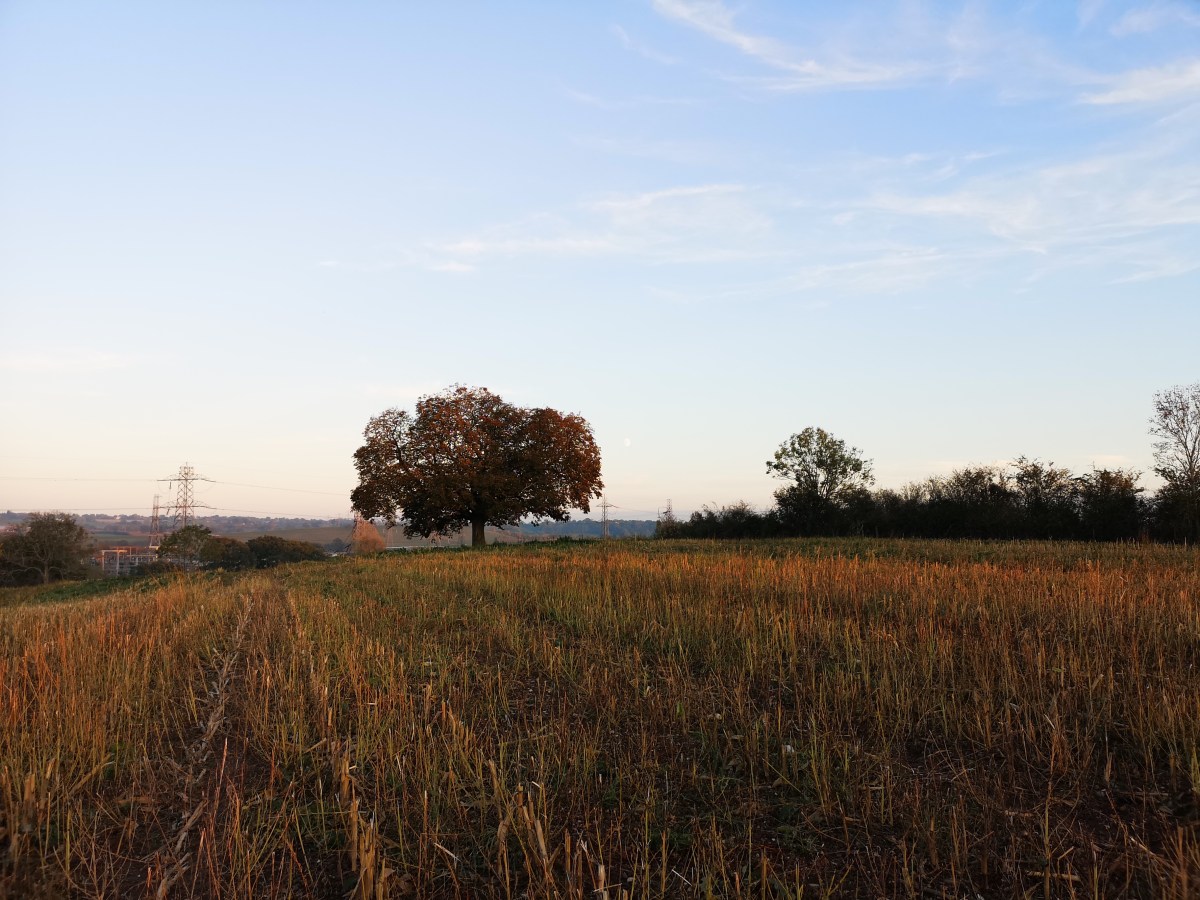
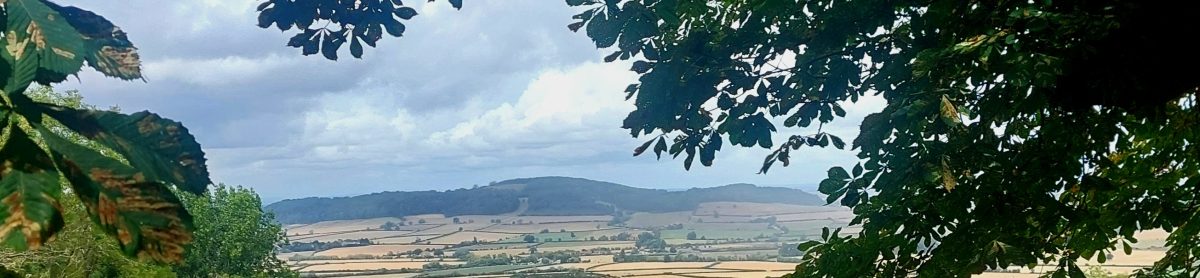
The only thing that could be done to tick the must haves on my Saturday autumn afternoon list was to go for a country walk. Somewhere olde world, with a bit of charm and seasonally colourful to boot. As luck would have it, many of the villages surrounding the town where I live match this criteria.

dav

Ever since discovering books about countryside folklore a few years back, and taking an interest in the social aspect of days gone by, I have loved visiting picturesque villages, imagining the people that would have lived there, and the tales that could be told about the village characters. It’s easy to imagine that time to be easier, more carefree. I bet it wasn’t, it was just different. People had problems and worries just like us, they were just different ones. They probably had more at stake, but I guess they had more of a community around them to help out and make everything seem less of a burden whereas today, we are encouraged more to rely upon the state in tough times, being convinced we can go through life alone if we need to. What you think of this depends upon many factors, like upbringing, current situation and general demeanor. I can look at the life of a farm labourer and feel envious of his lifestyle back in 1870, but I wouldn’t have known his concerns. He would probably laugh at mine.

oznor

Passing through villages, past old cottages, pubs, war memorials and farms, I get the sense of community and my mind starts to write stories and poems. One of my favourite pastimes.

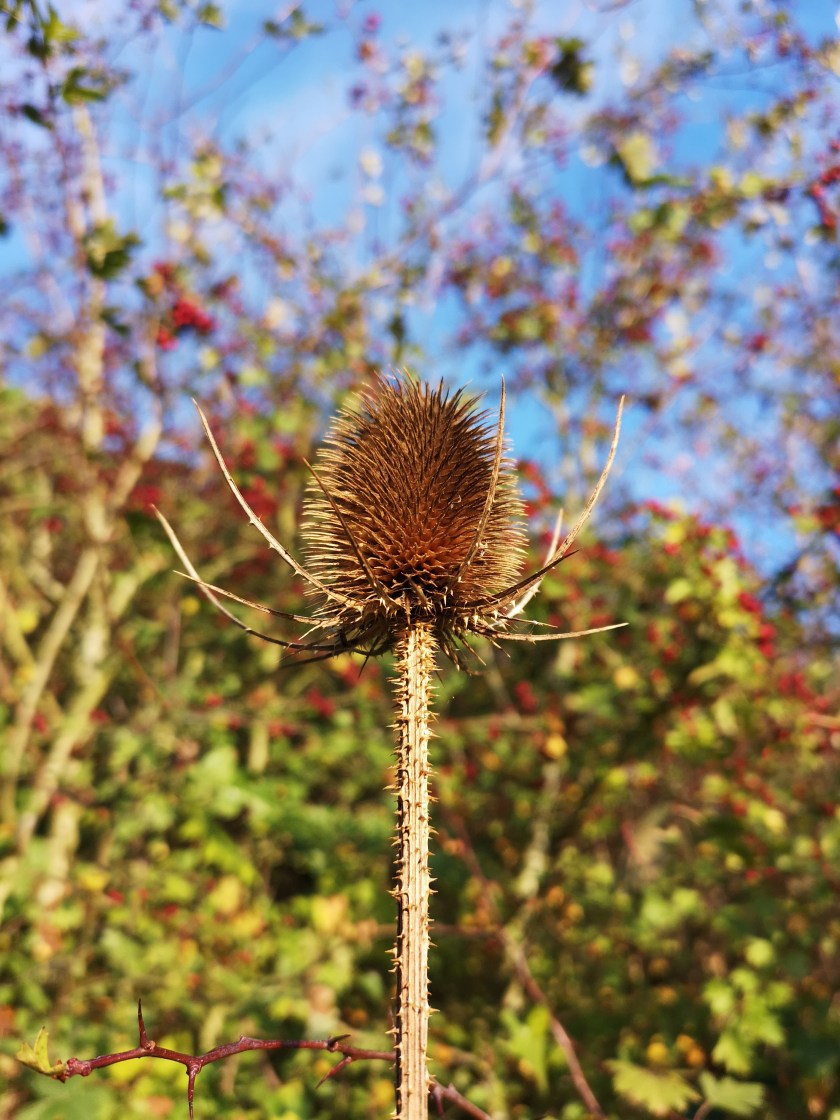
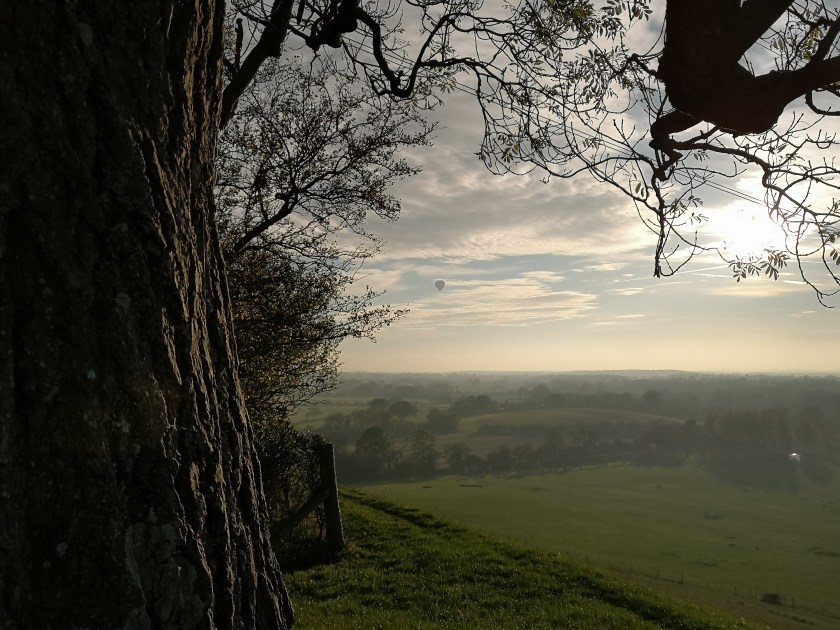
The low autumnal sun allowed me to take some interesting pictures due to the abstract long shadows. I love the golden light bouncing off the fading summer colours in an almost sympathetic way, like it’s summer being given one last victory lap before winter takes over properly for a few months. In surreal moments I find myself imagining that it actually could be the last autumn ever and it’s time to be in the present and appreciate fully the colours, the light, the smells, the chill in the air, the ripening of the fruits. I do actually get like that in every season given enough time. In the distance, a flock of large-ish birds was spotted, most likely Fieldfares or Redwings. Maybe Mistle Thrushes. One of the nicknames for the Mistle Thrush is Mizzly Dick and its song is a sure sign that autumn is in full swing and colder weather is just around the corner. Folklore also says they speak seven languages and grow a new set of legs every ten years!

It was one of those gorgeously bright days that will live in the memory for a very long time.


Bloody foreigners

A couple of weeks ago, an email popped in to my inbox, entitled ‘Volunteer day’. Curiosity got the better of me and I opened it. It was an invite to a corporate volunteer day at a local nature reserve. This is right up my proverbial autobahn so I registered my interest and as luck would have it, I was accepted. The day was to be spent on an RSPB (Royal Society for the Protection of Birds) reserve, and was not specific about what work we would be doing. I imagined it would be putting up bird nesting boxes, or if I was very lucky, standing in the lake up to my nicky-nacky-noos in rubber waders clearing it of unwanted filth and algae.

A few years back, I really looked into changing career to conservation work. I chatted to a few people in that sector and the general feeling was the same – stay in the job you’re doing and volunteer whenever you can. The reason for this is that in order to be paid a decent wage to do it, you more or less have to be desk-bound, carrying out site surveys and risk assessments, while all of the hands-on, mucky, fun bits get done by volunteers.

When the day arrived, we were all gathered together and given a brief overview of the organisation, the reserve itself and the work required. We were then put to work raking up grass cuttings in the wildflower meadow on the edge of the lake. No waders in sight. The purpose of this raking is so the nitrogen rich grass cuttings don’t lie around enriching the soil. Enriched soil isn’t as good as it sounds. It is a breeding ground for common, more dominant plants like netyles, dock leaves and dandelion. Impoverished soil is the stuff that the more rarer, interesting and diverse flowers love, and they will thrive.

A good example of wildflowers taking over is a hundred years ago. In November 1918 when the armistice was signed, bringing (at that point) a ceasefire on the Western Front in World War 1, the landscape was completely destroyed. Shell holes pocked the farmland, and some villages and roads were completely wiped off the face of the Earth. The four years of shelling, marching and trekking in the mud had churned the ground over and over again. By the following spring, these Flanders Fields were bright red. The red of the poppy. Poppies, you see, love impoverished soil, and the seeds will lay dormant for years waiting for exactly the right moment to germinate. In 1919, the conditions were perfect.

Well, we raked up all the grass cuttings until mid-afternoon while someone got on and burned them. We then moved on to the next task in hand. Between the meadow and the lake, there is an area usually called a scrape which is where the wading birds can potter about and is usually quite shallow. At low water, it was fairly evident that all was not right. What was usually muddy with occasional vegetation, but it looked more like a lawn out there. It turns out it is a plant from New Zealand, called Crassula, or New Zealand pygmy weed. Like most invasive species, it found its way over here because some idiotic explorer thought it looked ‘pretty’ and wanted to spruce his rockery up. A century later and it’s everywhere because firstly, it doesn’t belong here and secondly, it has no predators or parasites here to control it. This carpet of foreign trouble was in the process of being scraped up and destroyed while we were there, using a digger. All equipment used, including boots, tyres, buckets etc needs to be jetwashed immediately after use so none of the plant can spread elsewhere. And this is just the tip of the iceberg.

We were put to work cutting down willow trees that have gone beserk and taken over on the fringes of the water. We all looked like beavers, scurrying across the scrape dragging huge branches behind us that were three times the height of us. These all went on the fire, that I swear some people were becoming obsessed/enchanted by, almost a primeval urge, a calling from our ancestors. Man’s obsession with fire still reigns despite the new age of smart devices, money and fast cars.

Crassula is only one offender on the unwanted (and costly) foreign invaders list. Here is a list, in no order, of what we are facing in the UK. To any international readers, it would be great to hear your lists too!

  • Signal crayfish (no, it doesn’t improve 4g reception)
  • Himalayan balsam
  • Rhododendron
  • Japanese knotweed
  • Pirri-pirri burr
  • Floating pennywort
  • Brown rat
  • Mink
  • Grey Squirrel

There are countless others that belong on this list, which can be covered on another post. Whilst some of these are nice to look at, it is at the expense of our own flaura and fauna, and ultimately, our ecosystem, which is already at crisis point as well as practically every country on the planet. Restoring a natural ecosystem should be high on every environmental agency’s list. I just hope it’s not too late.